
Defenders of Justice Under Pressure
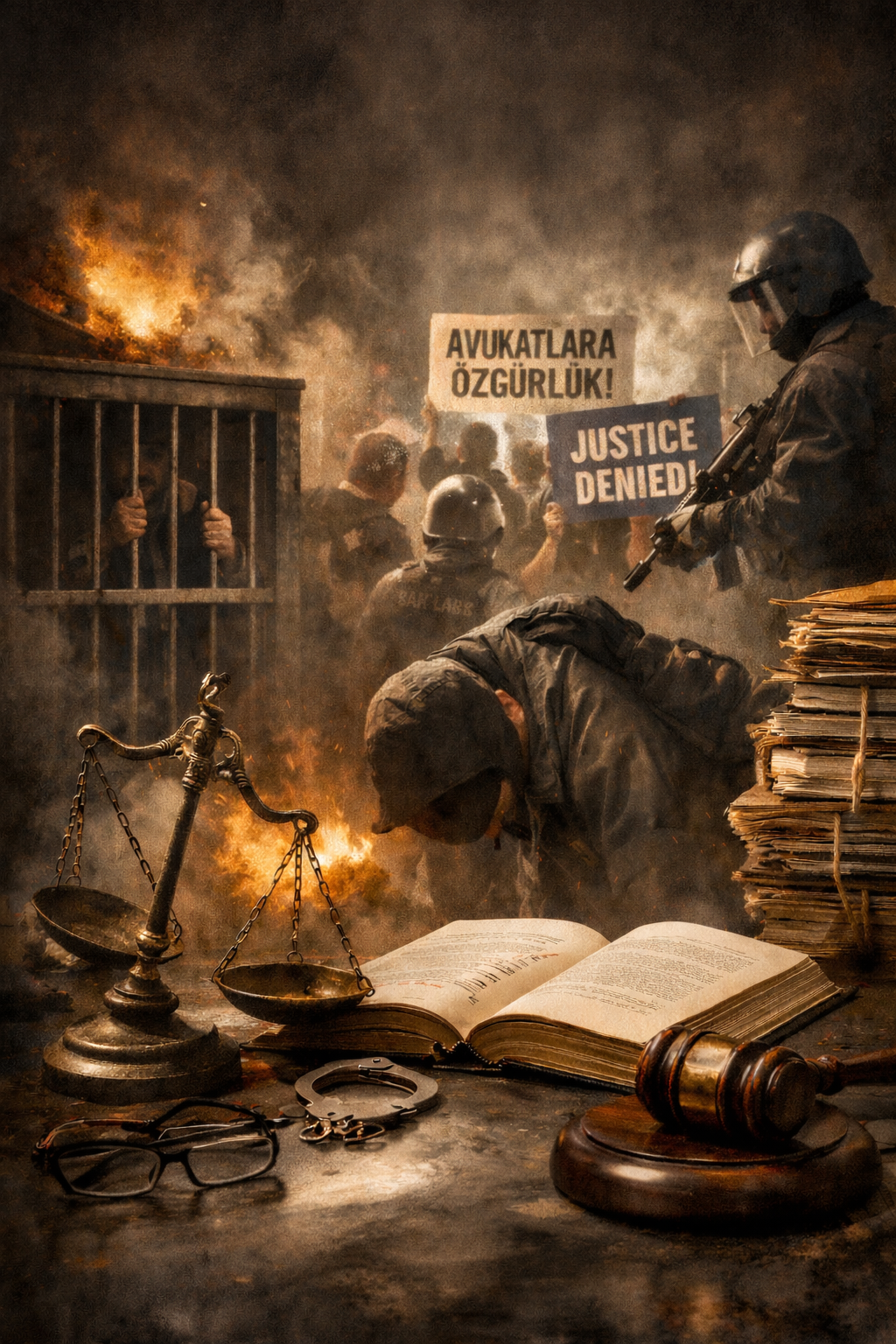
Every year on 24 January, the Day of the Endangered Lawyer is observed worldwide to draw attention to lawyers who face threats, intimidation, imprisonment, and violence because of their professional activities. This day is not merely a commemoration; it is also a global call for solidarity in defense of the right to legal defense, one of the fundamental pillars of the rule of law.
Historical Background: The Madrid Massacre
The origin of this day is rooted in one of the darkest attacks in recent history. On 24 January 1977, far-right militants carried out an armed attack on a labor law office located on Atocha Street in Madrid, killing five people. This event, known as the Atocha Massacre, became a powerful symbol of the fact that the safety of lawyers in a democratic society is inseparable from the freedom of society as a whole.
Since 2010, this date has been commemorated internationally, with each year focusing on a different country. Ironically, only a few years later, systematic pressure and persecution against lawyers began in our own country. After 2013, thousands of lawyers and other legal professionals were dismissed from office, imprisoned, tortured, and in some cases abducted and subjected to severe ill-treatment for months.
Why Are Lawyers Targeted?
Targeting a lawyer effectively means disabling the rights of the client and, consequently, undermining the right to a fair trial. Lawyers are commonly subjected to repression for the following reasons:
- Identification with Clients: In many countries, lawyers are identified with the alleged crimes or political views of their clients. Defending a person accused of terrorism may result in the lawyer being labeled a “terrorist” as well.
- Obstacle to Unlawfulness: Lawyers act as a constitutional safeguard against arbitrary actions by the state or powerful actors. Breaking this safeguard removes one of the most significant barriers to unlawful practices.
- Human Rights Monitoring: Lawyers who pursue politically sensitive cases or document human rights violations are often silenced because they expose systemic abuses.
A Global Threat: Systematic Methods of Repression
Across the world, lawyers are confronted with similar mechanisms of repression:
- Judicial Harassment: Unjustified investigations and prolonged pre-trial detention initiated solely because of professional legal activities.
- Physical Violence and Targeted Attacks: Assaults on lawyers outside courtrooms, in their offices, or in front of their homes. Arrests accompanied by torture and ill-treatment have also occurred, including cases where lawyers were abducted and tortured for months.
- Stigmatization and Disinformation: Smear campaigns conducted through political discourse and media outlets. Since the events of 17–25 December, lawyers have been systematically subjected to surveillance, criminal investigations, trials, and long prison sentences.
- Interference with the Independence of Bar Associations: Attempts to place professional organizations under political control or render them ineffective. In our country, the creation of multiple bar associations within the same city was imposed, particularly in cities where existing bars resisted executive interference.
Erosion of the Right of Defense and Professional Independence
The foundation of the legal profession is the right of defense. However, in certain political periods and judicial practices, the defense is treated as a secondary element of the proceedings. The criminalization of lawyers, their identification with their clients, and the pressure they face while performing their professional duties are incompatible with universal principles of law. Such practices threaten not only lawyers themselves but directly undermine the right to a fair trial.
In our country, lawyers were deliberately placed under pressure to prevent the defense of individuals and institutions targeted by those in power. Instead, a controlled and politically aligned form of defense was imposed.
Physical Safety and the Risk of Violence
In recent years, the rise in verbal and physical attacks against lawyers has become one of the most alarming threats to the profession. Attacks occurring in courthouses, police stations, prisons, or law offices are exacerbated by the lack of adequate security measures. Lawyers being targeted solely because of their professional activities is a clear warning sign of a failing rule of law.
One concrete example is Attorney Turan Canpolat, who has been unlawfully detained for ten years despite having fully served his sentence, due to arbitrary and illegal obstacles to his release. His daughter stated:
“If there is even a shred of justice left in this country, this illegality must end immediately. My father spent years in prison despite being innocent. His sentence has been completed, yet he remains incarcerated.”
Thousands of lawyers, judges, and prosecutors have similarly been dismissed, imprisoned, or forced into exile—through a process reminiscent of historical political purges.
Without Defense, There Is No Justice
The defense is one of the three fundamental pillars of judicial proceedings, alongside the prosecution and the judgment. When the defense operates under fear, judicial decisions lose their independence and prosecutorial claims become immune from effective scrutiny. The Day of the Endangered Lawyer proclaims this truth to the world:
In a country where lawyers are not free, no one is safe.
Today, we do not only commemorate our endangered colleagues; we also reaffirm that an independent legal defense is an indispensable condition for democracy, the rule of law, and human dignity.