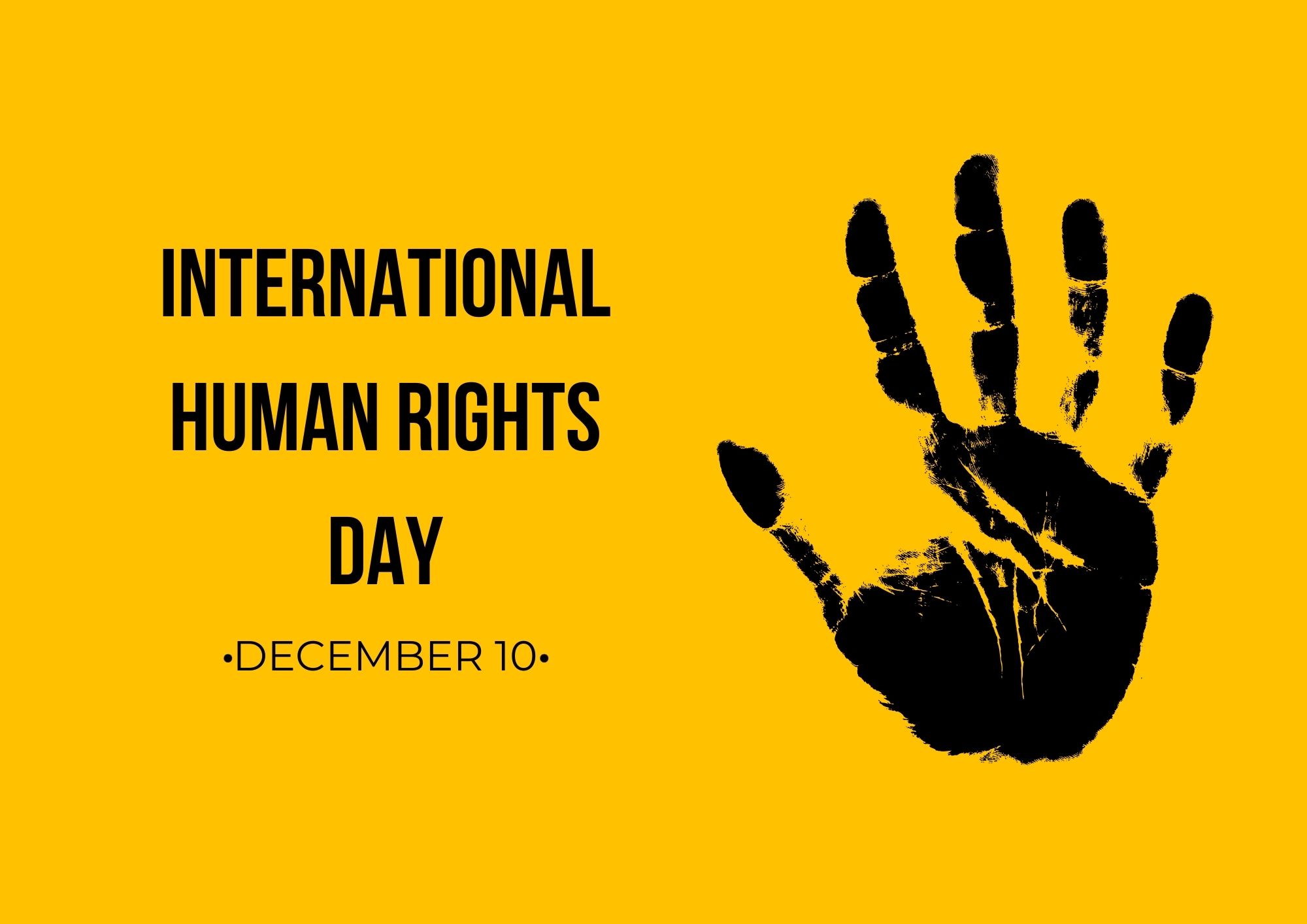

The United Nations General Assembly adopted the Universal Declaration of Human Rights, which states that all humans have universal, indivisible, and inalienable rights.
This date marks the end of thousands of years of social, political and legal struggle. It began with the dream of a world where children grow up safe, women can speak freely and everyone can live with dignity. To become modern and universal, human rights have had to overcome many historical challenges. This struggle is the result of many injustices and violations of rights from ancient times to the present day. Understanding the historical development of human rights and the steps reflected in the law will help us understand how deep-rooted this struggle is.
The history of the fight for human rights
The idea of human rights is as old as human history. It was first expressed in ancient teachings and religions.
Some thinkers in ancient Greece and Rome said people have rights from birth. Socrates said people should have freedom of thought. His last words were about this, and they are the earliest known defence of freedom of thought.
In ancient Rome, citizens had certain rights, but only the Patricians and Plebeians had them. The Patricians were the rich and noble, while the Plebeians were the poor. The other people in Rome were slaves. Slaves had no political rights. They were considered property.
The steppes of Central Asia show another side of the human rights story. Another source, Kutadgu Bilig, says that people should respect rights and obey the law. It says that rulers and people should obey the law and live in joy.
Signed in 1215 between King John of England and the nobility, Magna Carta Libertatum is one of the first written examples of limiting state power. It is not considered a human rights document in today’s sense. This document has 63 articles. It aims to prevent the arbitrary use of state authority and is an important step in the history of human rights.
Mevlânâ Celâleddin-i Rûmî is one of the oldest and most important figures in history. He was a human rights activist who believed that everyone should be free to think.
Mevlânâ said, ” You have thought and everything else. You are made of thought. The rest is flesh and sinew.”
Jean-Jacques Rousseau was an important thinker of the Age of Enlightenment. He said that contracts should be fair to everyone and not allow one person to rule another. He wanted to create a society where everyone is equal and free.
Another important document is the American Declaration of Independence, which was adopted in 1776. It emphasises the principles of human rights. The most famous statement is “All men are created equal, that they are endowed by their Creator with certain unalienable rights, that they have the right to life, liberty and the pursuit of happiness”.
The first modern human rights movement began with the revolutionary movements in 17th and 18th century Europe. It gained momentum with the contributions of Enlightenment thinkers, especially in the 18th and 19th centuries.The French Declaration of the Rights of the Citizen and of Man in 1789 was the most important development regarding human rights in the West. This 17-article text was later translated as “All human beings are born equal in freedom, dignity and rights” in the first article of the United Nations Universal Convention on Human Rights in 1948.
The idea of human rights is as old as history, but it only became a clear concept in the 20th century.
The Universal Declaration of Human Rights covers fundamental rights such as the right to life, liberty and security, protection against torture, freedom of thought, freedom of religion, equality and the right to a fair trial. The Universal Declaration of Human Rights says that everyone has the same rights and that no one should be treated differently. It has helped to stop human rights violations and encourage the international community to protect and defend human rights. It is still the main source of reference for human rights defenders.
Global Stakeholders in Human Rights Development and Conclusion
Human rights flourish in societies that have democracy and the rule of law. These values need to be protected in a society where the rule of law and democracy are strong.
Many groups work to stop human rights violations. These include international organisations, governments and non-governmental organisations. They work to stop violations, hold people responsible and help victims.
In addition to governments and the United Nations, civil society organisations and human rights defenders are also involved in the fight against human rights violations. These groups document violations, mobilise public opinion, encourage policy makers to implement reforms and support victims. All international efforts aim to build a more just and human rights-respecting world.
Today, this collective struggle aims not only to redress past violations of rights, but also to protect human dignity in the future.