
The attempted military coup of 15 July 2016 constituted a grave attack against the democratic constitutional order. This fact is not open to debate. Yet the true test of a state governed by the rule of law does not end on the night when the coup is suppressed; it begins the following morning. A State is legitimate only insofar as it remains bound by law even when confronted with the gravest crimes against itself. The moment it begins to regard torture, coerced statements, or accusations unsupported by evidence as inevitable consequences of “extraordinary circumstances,” it starts to erode, by its own hand, the very legal order it claims to defend. For this reason, the testimony given by former First Lieutenant Kübra Yavuz in the documentary WITNESS / After That Night, released on 10 July 2026, is not merely an allegation of personal victimisation. It raises a profound question concerning the State and the rule of law—one that the authorities have left unanswered for the past decade.
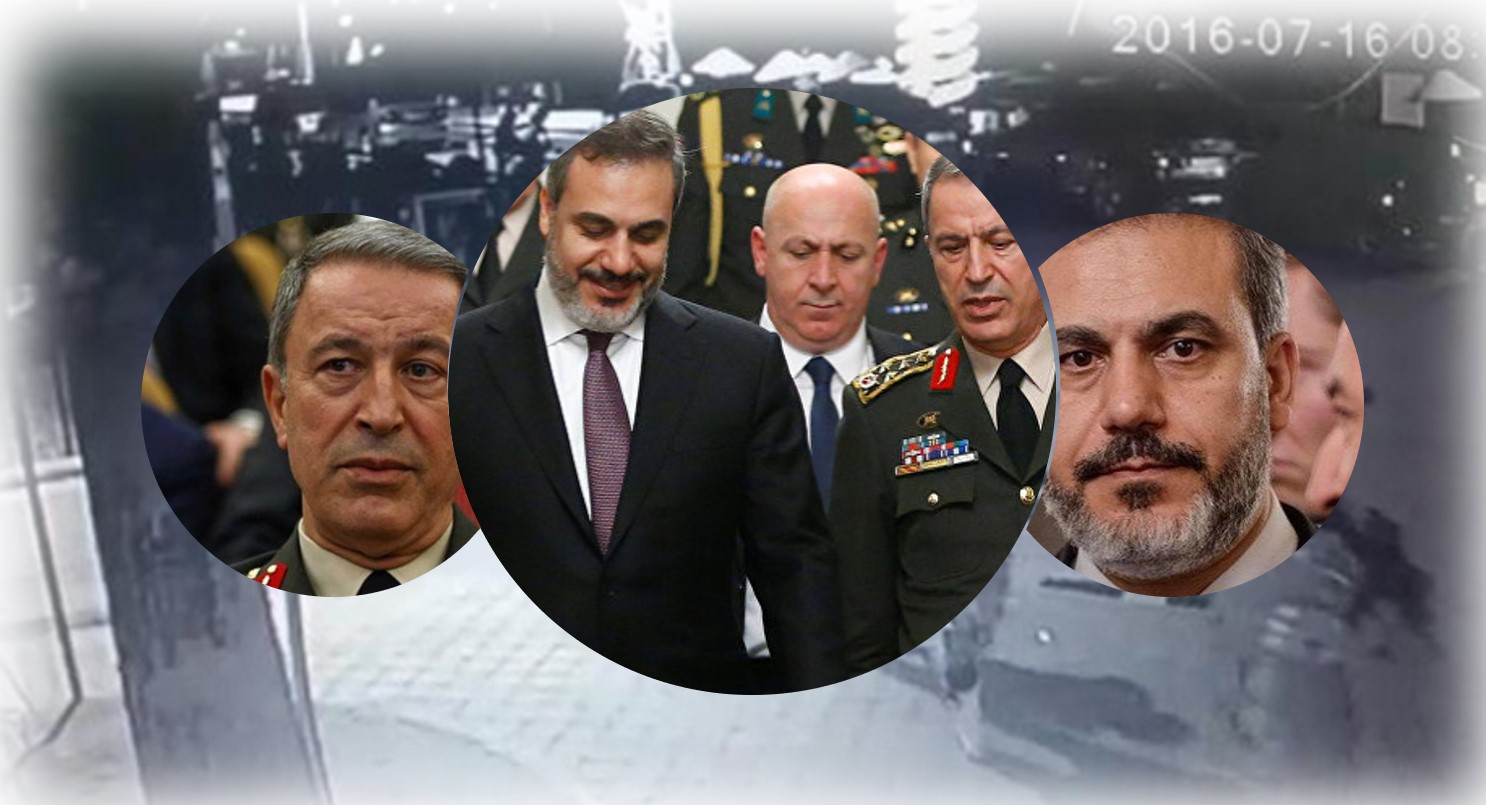
On the day of 15 July, Kübra Yavuz served as a protocol officer at the Turkish General Staff Headquarters. Video recordings show her escorting the then Director of the National Intelligence Organization (MIT), Hakan Fidan, as he departed from the headquarters. In the documentary, she explains that this was an entirely routine duty; that she had no prior knowledge either of Mr Fidan’s visit or of the substance of his meeting; that both Hulusi Akar and Hakan Fidan appeared remarkably calm after their meeting; and that shortly thereafter she heard low-flying aircraft followed by gunfire. Standing alone, these observations prove neither that the attempted coup had been known in advance nor that the events were orchestrated. The role of a lawyer is never to substitute suspicion for judicial findings. Nevertheless, these details reinforce the legitimacy of the public demand that the official timeline of the critical hours of 15 July, the relevant meeting records, and the orders issued during that period be disclosed in a complete and transparent manner.
The documentary’s principal legal significance, however, lies in Yavuz’s account of her interrogation at the General Staff Headquarters on 2 August 2016. She alleges that she was threatened; taken, with both her hands and eyes bound, to the headquarters’ shooting range; heard the sounds of physical assaults and electric shocks; encountered soldiers who had been subjected to severe violence; and was pressured into accepting a statement that had allegedly been prepared in advance. The names Zekai Aksakallı, İrfan Özsert, and Ömer Ertuğrul Erbakan are also mentioned in her account. With respect to each of these individuals, the presumption of innocence fully applies. These allegations cannot be presented as though they were established by a final judicial judgment. Yet the same constitutional principle also protects Kübra Yavuz herself. The State cannot simultaneously insist on protecting the reputation of senior public officials while dismissing, from the outset, the testimony of a military officer who herself stands trial.
Moreover, these allegations did not first emerge in 2026, many years after the events. In her publicly reported defence statement in 2017, Yavuz had already declared that the statement she gave at the General Staff Headquarters had been extracted under the threat of execution. On 19 April 2018, while testifying before the 24th Heavy Penal Court of Ankara during the proceedings against her husband, she again stated that she had been held for two days at the shooting range, subjected to ill-treatment while blindfolded and handcuffed, and compelled to sign a dictated statement. The court regarded these allegations as sufficiently serious to request from the General Staff Headquarters the identities and addresses of those who had participated in the interrogation. In its reply dated 29 May 2018, the General Staff acknowledged that statements of this nature had indeed been taken at the headquarters after the coup attempt in order to assist law-enforcement authorities. At the same time, however, it asserted that it was unable to identify the individuals who had conducted the interrogations and that no relevant records or documents could be located. This response represents the central legal issue in the case.
If, within the most secure military headquarters of the Republic of Türkiye, it is impossible to determine who was on duty, which personnel entered the premises under whose orders, to whom detainees were delivered, or who used the interrogation facilities, then only two explanations are possible. Either the State’s most fundamental system of official record-keeping collapsed, or the existing records were never subjected to an effective investigation. Either explanation engages the responsibility of the political authorities. The assertion that “those were chaotic days” cannot constitute a legal justification. On the contrary, precisely because individuals deprived of their liberty were entirely under State control during that period, the State’s duties of registration, supervision, and accountability became even more stringent. A military headquarters must never be transformed into an unidentified site of unlawful interrogation. If the State cannot identify those alleged to have committed unlawful acts within its own premises, impunity ceases to be merely the consequence of institutional failure—it becomes a system generated by the institution itself.
Article 17 of the Constitution of the Republic of Türkiye absolutely prohibits torture, ill-treatment, and treatment incompatible with human dignity. Article 15 further guarantees that, even in times of war or a state of emergency, the physical and moral integrity of the individual remains inviolable. Likewise, Article 148 of the Code of Criminal Procedure expressly prohibits methods that undermine a person’s free will during interrogation, including ill-treatment, torture, exhaustion, deception, coercion, and threats. It further provides that statements obtained through such methods are inadmissible as evidence, even where the person subsequently purports to consent to their use. In addition, Article 38 of the Constitution guarantees that no one may be compelled to incriminate himself or herself or close relatives and that evidence obtained unlawfully shall not be admitted before the courts. Consequently, if the methods described by Kübra Yavuz are accurate, the issue extends far beyond a disciplinary offence. It concerns a grave violation striking at the very core of both the absolute prohibition of torture and the right to a fair trial.
A statement extracted through coercion harms not only the individual compelled to sign it. Every name appearing in that statement, every subsequent investigation derived from it, and every official narrative constructed upon its contents inevitably become legally suspect. If a document allegedly signed under torture has been relied upon in proceedings against other defendants, the duty of the courts is not simply to read the statement once again, but to examine the illegality at its very source. Truth cannot be established through torture. Torture does not lead an investigation to the truth; it leads it toward the conclusion the interrogator wishes to obtain. For this reason, investigating allegations of ill-treatment does not weaken the struggle against those responsible for the attempted coup. On the contrary, it safeguards the legitimacy of criminal proceedings by ensuring that the actual perpetrators are prosecuted on the basis of lawful evidence while those who are innocent are distinguished from those who are guilty.
The Constitutional Court of Türkiye has likewise emphasized on numerous occasions that whenever an arguable allegation of ill-treatment is raised, the State is under a positive obligation to conduct an investigation that is immediate, independent, impartial, and capable of producing practical results. In Feride Kaya and Hamdiye Aslan, the Court held that delay, indifference, or investigative practices that effectively shield public officials from accountability themselves constitute procedural violations of the prohibition of torture. From the perspective of Article 3 of the European Convention on Human Rights, the prohibition is equally absolute. Neither a state of emergency, nor terrorism, nor an attempted coup creates any exception. In 2024, the United Nations Committee against Torture also expressed concern regarding continuing allegations in Türkiye—particularly after 2016—of beatings, electric shocks, and comparable methods allegedly used to obtain confessions, together with the persistent failure to conduct effective investigations into such claims.
The Government, for its part, has consistently informed international bodies that its policy of “zero tolerance for torture” remains fully in force; that every allegation is investigated; and that emergency measures adopted after the attempted coup have not resulted in impunity. In law, however, it is not slogans that speak—it is the case file. Kübra Yavuz’s allegations have appeared in judicial records for years. The fact that her interrogation took place within the General Staff Headquarters has been confirmed by the institution’s own official response. Yet the identities of those who conducted the interrogation have never been disclosed, nor has the public been informed of which prosecutorial authorities carried out which investigative measures. Moreover, the fact that one of the officers named in the allegations was promoted to the rank of general in subsequent years inevitably gives rise to legitimate concerns regarding both the independence and the seriousness of the investigation. The Government’s assertion of “zero tolerance” stands, in this concrete case, in sharp contrast with zero transparency.
Kübra Yavuz’s own legal status in the criminal proceedings must also be described with precision. In the General Staff Headquarters Main Trial, she was acquitted of all charges in 2019. In 2024, however, the 3rd Criminal Chamber of the Court of Cassation quashed the acquittal relating to the charge of membership in a terrorist organisation on the ground of an incomplete examination of the evidence, and the retrial commenced in 2025. A decision to quash an acquittal is not a conviction. To describe Kübra Yavuz today as either a “coup participant” or a “member of a terrorist organisation” would therefore violate the presumption of innocence. Nevertheless, when one considers together the many years of criminal proceedings, the public stigmatisation she has endured, and the continuing failure to clarify her allegations of torture, it becomes apparent that the criminal justice process itself has effectively turned into a punishment. The Government’s responsibility therefore arises not only from the allegations of ill-treatment, but also from its failure to administer justice within a reasonable time and through procedures capable of inspiring public confidence.
At this stage, what is required is not to launch yet another propaganda battle centred on a documentary. Rather, the Ankara Chief Public Prosecutor’s Office should conduct an independent and comprehensive investigation into the interrogations allegedly carried out at the General Staff Headquarters. Such an investigation should collect the duty rosters covering 1–3 August 2016, entry and exit records, surveillance footage, operational orders, vehicle logs, and detention transfer records. Statements should be taken independently from Kübra Yavuz and from every other individual claiming to have been held in the same location. The officials whose names appear in the allegations should be questioned in a manner capable of dispelling any reasonable doubt. If records have disappeared or been destroyed, responsibility for their disappearance should likewise be investigated. Every criminal investigation and trial in which the allegedly coerced statement was relied upon should be identified, and the evidentiary value of that statement should be reassessed. At the same time, the timing, substance, and subsequent orders relating to the meeting between Hulusi Akar and Hakan Fidan should be opened to parliamentary and public scrutiny through procedures capable of protecting legitimately classified information while ensuring democratic accountability.
An effective investigation is not achieved merely by assigning a case number and allowing the file to remain dormant for years. The authority responsible for the investigation must be institutionally and practically independent from the military and political circles mentioned in the allegations. Victims and witnesses must be able to testify free from fear of intimidation or retaliation. Medical and psychological findings should be evaluated in accordance with the standards established by the Istanbul Protocol. Where the overwhelming majority of the evidence remains in the possession of State authorities, the entire burden of proof cannot simply be shifted onto Kübra Yavuz. Whenever official records cannot be located, it should be possible to verify which institution searched for them, when the search was conducted, and what results were obtained. Otherwise, the investigation ceases to function as an instrument for discovering the truth and instead becomes a procedural shield protecting public officials through the mere passage of time.
Nor can the Government avoid its own political responsibility by referring the matter solely to prosecutorial authorities. The role of the executive is not to determine the outcome of the investigation. Its responsibility is to ensure that evidence is preserved, that public institutions cooperate fully with investigators, and that the officials named in the allegations are unable to use the authority of their offices to influence the course of the proceedings. Although at least eight years have passed since these allegations first entered the judicial record, the public has never been presented with a clear and comprehensible account of the investigative steps taken. This prolonged institutional silence has only deepened public distrust. Nor may the concept of State secrecy be invoked as an unlimited veil concealing allegations of torture. Confidential information may, where necessary, be examined through closed procedures before a judge or a parliamentary commission. No regime of secrecy, however, can legitimately serve to shield grave violations of human dignity from accountability.
The conclusion regarding the Government’s responsibility is therefore unmistakable. The responsibility of the political authorities does not arise because every statement made by Kübra Yavuz should already be accepted as true. Rather, it arises because the authorities have failed, for many years, to conduct an independent investigation into detailed and verifiable allegations of torture that have long been available to them. The executive bears responsibility for ensuring that institutions under its authority preserve official records, that prosecutorial authorities conduct effective investigations, and that public officials are held accountable regardless of their rank or position. Until these obligations are fulfilled, the resulting silence cannot be regarded as neutral. It protects those who possess power, isolates those who claim to have been victimised, and steadily erodes public confidence in the administration of justice.
The legitimate way to confront the legacy of 15 July is not to suspend the rule of law, but to apply it equally to everyone. The same principle governs both those who suffered as victims of the attempted coup and those who later claim to have become victims of unlawful treatment. The State does not investigate the truth selectively. Kübra Yavuz’s testimony does not, by itself, resolve every unanswered question surrounding those events. It does, however, raise questions that are far too concrete and substantial for any government to ignore. Unless those questions are answered through an independent judiciary, accessible official records, and a transparent and verifiable investigation, the Government’s claim that “we defended democracy” will inevitably remain incomplete. For democracy is defended not only before tanks in the streets, but also before a blindfolded suspect deprived of liberty.
REFERENCES AND NOTES
- Alesta, WITNESS / After That Night, 10 July 2026.
- T24, First Lieutenant Kübra Yavuz, who escorted Hakan Fidan on the night of 15 July: “I gave my statement at the General Staff Headquarters under the threat of execution”, 7 March 2017.
- Müyesser Yıldız, A Court Requested the Identities of the Torturers from the General Staff, 22 June 2018; reporting on the General Staff’s response submitted to the 24th Heavy Penal Court of Ankara.
- Constitution of the Republic of Türkiye, Articles 15, 17 and 38.
- Code of Criminal Procedure No. 5271, Article 148 (official text of the Ministry of Justice).
- Constitutional Court of Türkiye, Feride Kaya, Application No. 2016/13985, 9 June 2020; Hamdiye Aslan, Application No. 2013/2015, 4 November 2015.
- European Convention on Human Rights, Articles 3 and 15(2).
- United Nations Committee against Torture, Concluding Observations on the Fifth Periodic Report of Türkiye, CAT/C/TUR/CO/5, 14 August 2024, especially §§ 20–21.
- Official observations submitted by Türkiye in response to the United Nations Committee against Torture, 2024.
- Demirören News Agency (DHA), Sentences Delivered in the General Staff Headquarters Main Trial (information concerning Kübra Yavuz’s acquittal), 20 June 2019.
- Anadolu Agency, 149 Defendants in the General Staff Headquarters Main Trial concerning FETÖ’s Coup Attempt to Be Retried, 21 January 2025.